
Translation is a tricky thing, especially in the context of translating a song. There are words and phrases that may exist in one language but don't in another. Song lyrics in particular are prone to using metaphor and at times can be nonsensical (see a lot of stuff REM wrote. Not a diss, I love REM.) All of this and you still need to incorporate a satisfying rhyme scheme once you've translated the work.
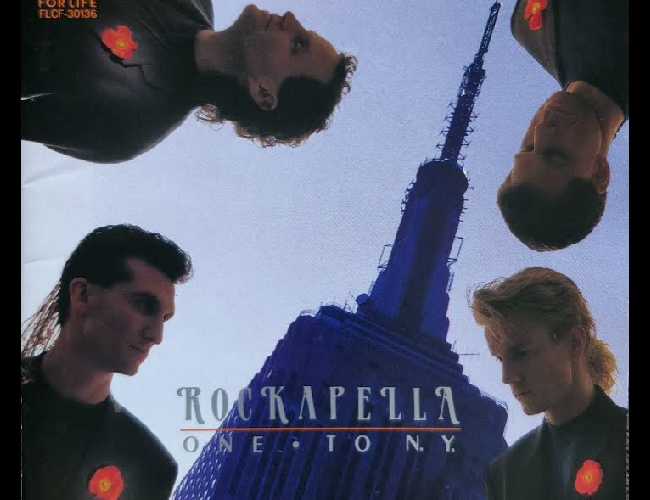
I bring this up because Rockapella's first full album (called One: To NY) consists entirely of covers of Japanese pop songs translated into English by Ralph McCarthy. I was curious as to how close to the original lyrical intent McCarthy's translated lyrics tended to be. I assumed a lot of these songs were pretty different in content but more or less the same in concept. For some of the songs, that's more or less the case. Take Tatsuro Yamashita's "Ride on Time". In Rockapella's version, the lyrics are colorful declarations of love and from what I can tell, Yamashita's original lyrics are as well. Of course, they are very different lyrics; Japan has its own colorful ways to describe being in love but the point gets across in both languages.
On the other hand we songs like "Diamonds" which have more specific imagery in Rockapella's version. In this case, it's a song about a romantic getaway in Paris. They talk about the Lourve and Notre Dame. There's a verse about not speaking the language emphasizing the fact that this couple is on a trip to a foreign country together and the memories they make together are compared to diamonds.
Now I already expected there were a lot of liberties taken when translating this song from the version by the original artists, a Japanese pop group called Princess Princess. There is going to be an expected change in perspective as a song performed by a group of five girls is adapted to be sung by a quartet of guys. But what surprised me was that Paris doesn't come up once.
In fact, the original song seems to celebrate the point-of-view character's independence. She talks about being young and in love, but isn't ready to be tied down as she still wants to go on adventures. Her adventures are the metaphorical diamonds in this case.
Does any of this really affect my enjoyment of Rockapella's album? No. But it is interesting to talk about. So for each track, I'll compare it to a translation I managed to find online. I don't speak Japanese. I'm sure other people who are fluent could interpret the lyrics a bit differently. But the translations I found are what I'm gonna be working with. I'm going to trust that they're in the ballpark and not just messing with us mono-linguists.
So, how about that album?
One: To NY was released exclusively in Japan in 1992. Like all of their Japanese albums, it was published by ForLife Records. With only two exceptions, none of these songs would appear on any other albums on either side of the Pacific Ocean.
The first track is “Ride on Time” and it’s a cover of a city pop song originally written and performed by Tatsuro Yashimata. It was a pretty big deal as it reached number 3 on Japan’s Oricon Weekly Singles Chart (which I assume is Japan’s equivalent to the US’s Billboard Hot 100) when it released in 1980. It was also used in Japanese commercials for Maxell cassette tapes.
Like I mentioned in the intro talking about the adaptation, this is a pretty generic love song lyrically speaking. The vocals are really the star of the show in both versions. High tenor Scott Leonard takes the lead on this opening track and he really belts it out. The backup consists of a lot of breathy vocalization, Barry’s staccato bass and some sampled snaps and such for percussion. It has a very different feel from the original. Yashimata's version is more definitively what I would call "pop" music while Rockapella's almost drifts more into "soul" territory.
Next up is “Candy” which is a song that (according to Wikipedia) originally released all the way back in 1977 by a then 18-year-old artist named Shinji Harada. Harada himself seems to have released several versions of Candy, including one in 1987 that was done a cappella. It’s likely that was what made this song ripe for a Rockapella arrangement. As a result, this song has a very similar feel to Harada’s versions of the song.
As an adaptation, this one sticks close to the original. Both versions feature lyrics about coming to visit in the middle of the night (creepy!) and the singer lamenting that they don’t have diamonds to offer. Rockapella’s version takes more time to comment on the attractive features of this hypothetical lover (crush?) than Harada does who gets a bit more esoteric by making observations like how the sky cries when she does. But the basic gist is intact. It’s far from my favorite song, but the jazzy nature of the track is a nice lead up to the exciting pop song that comes next.
And that pop song is the afore mentioned “Diamonds” originally by Princess Princess. This is my favorite song on the album. I absolutely love Sean’s vocals on this one. It’s such a fun, upbeat song featuring a lot of great harmonies, fun lyrics about a romantic trip to Paris, and some great bass vocals by Barry (who gets in a cheeky “Diamonds are a girl’s best friend” at one point.) The original song was written by Princess Princess member Kaori Okui, and was the first CD single in Japan to sell over a million copies, so I have to imagine that out of all the songs Rockapella covered on the album, this was the one that had the biggest cultural impact in its original time and place.
Then we move onto “Funky Monkey Baby”. This was originally performed by a Japanese group called Carol and the translation on this one seems to just be about a guy who is lamenting a lost love who was very funny. In that version of the song, the titular Funky Monkey is the girl. Not the most flattering metaphor in English, but I suppose it works in the context of someone who was fun and brought lots of joy and laughter to your life. The monkey in Rockapella’s version… is not a metaphor for a girl.
It’s a metaphor for the point-of-view character’s dick. It’s not subtle.
“Come see my funky monkey baby! He got a thing for you. Since you went away, my monkey been so blue!”
It’s kinda shocking to hear these lyrics coming from Rockapella since they tend to keep a lot of their output relatively family-friendly. But this song just pulls no punches and I kinda love it. It’s pure, unadulterated, middle-school level humor and I kinda respect how hard they lean into it. It's hilarious and absurd. Here’s a few more of the lyrics…
“He used to make banana-cream pie every night. We couldn’t get enough but, now he ain’t got no appetite, no no no!”
Jesus! My sides are splitting!
After this, we take things down a notch (or twelve) with “Ellie, My Love”. This is the only song on this album that would eventually make its way to an American album years later. I first heard this one on that American album and just assumed they were covering the Ray Charles song. Turns out, that was only half-right as Ray Charles was also covering the song. It was originally written and performed by Keisuke Kuwata. Rockapella’s version on this album is fantastic. Highlights include the harmonies on the chorus and some of Scott’s ridiculously high wailing near the end. It’s a great version of a great song and thinking back on the version I heard on the American album, I think I prefer this one. I'll talk about that other one someday.
Next up we have “Runaway” which was originally performed by a band called The Chanels who later changed their name to Rats & Star. This is an interesting group as they take heavy influence from Motown doo-wop groups. Their attire and penchant for having the singing members of the group do some simple choreography is clearly inspired by the Temptations. They also often have their singers perform in blackface which is... not great. I wish they didn't do that, but I'm not equipped to examine the implications of racist imagery being reappropriated by another culture that may or may not have understood the cultural ramifications of what they're doing. So we'll just move on.
Oddly enough, The Chanels actually have their own English version of this song that is very different from Rockapella’s. I’m not sure why they didn't opt to just sing The Chanels' version, but it’s not terribly important. Both versions get the same message across, the point of view character is wanting to leave a crappy town and asking the “lonely girl” to come with him. Both versions are great songs with a very similar feel to them. Not sure I've got more to say than that.
Next up is “Make it a Slow Boogie” originally performed by Yoshitaka Minami. This is another song that has a doo-wop feel to it. Listening to Minami’s original almost sounded like something that might play as a Tom Bosley informed me that “Happy Days is filmed before a live studio audience.” Rockapella’s version doesn’t quite evoke the same vibes. It’s extremely short at under two and a half minutes. It's fine, not a song I'm in love with.
The next song lets Elliot take the lead with “No No Boy.” Originally by Hiroshi Kamayatsu, this is the only song I couldn’t find a translation for, but I did find a recording of the original and I can say the vibes are very different. Rockapella slows down the song and replaces the funky instrumentals with some rather haunting background vocals. It sounds almost ethereal. I’m not sure how well that gels with lyrics that seem to be really trying to push a lady’s boundaries. There is a guest appearance by Lisa Leonard (Scott’s wife) who I assume is the voice we hear in the middle of the song telling the POV character that the time isn’t right. It's a bit uncomfortable, if I'm being honest. I don't hate it, it's my least favorite song on the album. I feel like Elliot got the short end of the stick on this one.
Next up is “Won’t be Long” which was originally performed by Da Bubble Gum Brothers. This is a very high-energy pop song with lyrics that are just about getting to some nebulous “there” by any means necessary. For Rockapella, Ralph McCarthy wrote lyrics that turn it into an anthem. I’m not sure if this was the intention, but this song sounds like it could be interpreted as a anarchist theme and I AM HERE FOR IT! Check out some of these lyrics…
“We’ve been slavin’ from 9 to 5, for the sake of some funky machine. Tonight we just wanna feel alive, if we still can feel anything… Won’t be long, til the power’s back where it should be. Won’t be long, only four billion people to set free.”
If it’s not a song advocating for an anarchist revolution, I don’t care, that's what it is to me. More songs about anarchy in the form of pop songs please. "Diamonds" is my favorite song musically, but this is my favorite lyrically.
Only three tracks left to go. We get another haunting tune with “Hotel Riverside”. This was originally performed by Yosui Inoue. Once again the lyrics are pretty accurate in Rockapella’s version featuring a young couple going to a fancy hotel, arriving by bus, and “swimming around like fish” in the bed in both versions. Though, Rockapella’s version adds a strange twist that seems absent from the original with a lyric about a hobo before we get to the couple.
“A purple bus roles up inside a lonely hobo wino’s dream.”
Then we come back around to this character at the end of the song when, from the couple's hotel window, they “see a hobo lying frozen on a windy city street.”
What is that all supposed to mean? Is the song meant to be reframed as a paradise this poor soul can only dream of as he freezes? Is this some sort of morbid Owl Creek Bridge scenario? I have no idea. It’s a strange way to repurpose the song but it had me ruminating on the lyrics more than I would have otherwise. I hate to be the guy who trots out a tired cliche like "It really makes you think," but, well...
The final cover track is “Olivia (I’m Listening)” which was originally performed by Amii Ozaki. The original is a gorgeous ballad that feels mournful even with a language barrier. Sure enough, it’s a song about a lost love. He has done something that drove her away. He seemed like a nice person at first, but the love is gone now and nothing can be done to save it. She doesn’t want to hear from this guy anymore.
Again, we’ve got a band of guys singing a song originally written with a woman’s perspective in mind, but instead of simply gender-swaping the characters (making it about a guy who falls out of love with a woman), the song almost sounds like it could now be coming from the point of view of the man who wronged the original's POV character with sorrowful lyrics about having done something wrong and not having “been much of a lover or a friend” but he wants to listen now. The guy's pleas are not convincing and I don't think they're meant to be. He doesn't seem to know what exactly he did wrong. Despite that it’s as sweet as it is desperate and clueless. It feels like it’s in conversation with the original rather than an adaptation and, lyrically, it's one of the most interesting things done on the album. It's the only song here where Hearing Ozaki’s version causes Rockapella’s version to land a bit differently for me.
And that’s pretty much the album. The last track bucks the trend and is an original tune made for Rockapella called “Tokyo Yo-Yo.” It’s just a fun song about how awesome Tokyo is to a group of white guys. There is some cheeky wordplay in the lyrics with lines like “Salarymen, Samurais ’n Sons”. It’s a fun way to cap off the album.
All in all, I really enjoy this one. I’m guessing there were rights issues that kept these songs from ever getting re-recorded for their American albums (with the exception of “Ellie” of course), but it’s a shame. Given that most of us in the States likely wouldn’t have been exposed to any of these songs, it could have been fun to see how American audiences took to them. In particular, I think “Diamonds” and “Won’t Be Long” could have been great inclusions on American albums. But whatever the reason, they only end up here. There are a few videos floating around YouTube of some appearances on Japanese TV performing some of the songs live, but I doubt these tracks remained part of their live sets for very long.
Next time, Rockapella cover popular American songs for their second Japanese release Two: From NY.
Track List
- Ride on Time Tatsuro Yamashita Lyrics
- Candy Shinji Harada Lyrics
- Diamonds Princess Princess Lyrics
- Funky Monkey Baby Carol Lyrics
- Ellie, My Love Southern All-Stars Lyrics
- Runaway Chanels Lyrics
- Make it a Slow Boogie Yoshitaka Minami Lyrics
- No No Boy Hiroshi Kamayatsu
- Won't Be Long Bubble Gum Brothers Lyrics
- Hotel Riverside (Yosui Inoue)[https://www.youtube.com/watch?v=OPoSXc_ODdg&t=2s] Lyrics
- Olivia (I'm Listening) Amii Ozaki Lyrics
- Tokyo Yo-Yo